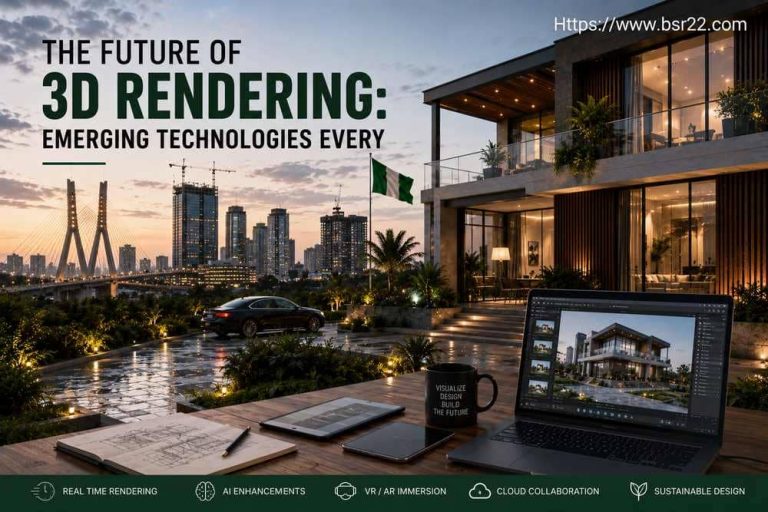

top 10 architectural visualisation
Architectural visualization has moved far beyond static renderings pinned to a presentation board. In 2026, the field sits at the intersection of artificial intelligence, real-time rendering engines, and immersive technology, fundamentally changing how architects, developers, and designers communicate ideas before a single brick is laid. Clients no longer just want to see a building; they want to walk through it, customize it, and understand how it will feel to live or work inside it.
This shift is reshaping workflows across architecture firms, real estate marketing teams, and visualization studios worldwide. Below are the ten most significant architectural visualization trends defining 2026, along with what they mean for professionals working in design, construction, and property marketing.
1. AI-Generated Visualizations Are Now Production-Ready
Artificial intelligence tools have crossed a threshold. What started as experimental image generators capable of producing rough concept art has evolved into production-grade tools that generate photorealistic architectural renders from simple text prompts or rough sketches.
Architects are now using AI to rapidly explore design alternatives during the concept phase, testing dozens of facade treatments, material palettes, and massing options in the time it once took to render a single image. Tools trained specifically on architectural datasets understand structural logic, proper material behavior, and lighting physics, making outputs far more reliable for client presentations than earlier generations of AI imagery.
The practical impact is speed. Firms report compressing the concept-to-presentation timeline from weeks to days, freeing designers to focus on creative decision-making rather than manual rendering labor. This doesn’t replace skilled visualization artists, but it does change their role: they’re increasingly curating and refining AI output rather than building every image from scratch.
2. Real-Time Rendering Replaces Pre-Rendered Walkthroughs
Game engines like Unreal Engine and Unity have firmly established themselves as the backbone of architectural visualization, and 2026 marks the point where real-time rendering has become the default rather than the exception for client-facing presentations.
Unlike traditional rendering, which requires hours or days to process a single high-quality image, real-time engines generate photorealistic visuals instantly as users navigate a 3D environment. This means clients can walk through a building, change the time of day, swap materials, or adjust lighting conditions live during a meeting, rather than waiting for a studio to produce updated static renders.
The benefit extends beyond convenience. Real-time rendering allows for genuine design exploration during client conversations, where feedback can be tested and visualized on the spot. This collaborative, iterative approach is becoming a competitive differentiator for visualization studios and architecture firms pitching new projects.
3. Immersive VR Walkthroughs Become Standard for High-Value Projects
Virtual reality headsets have become lighter, more affordable, and significantly more comfortable for extended use, removing many of the barriers that limited VR adoption in previous years. For high-value residential developments, commercial towers, and hospitality projects, VR walkthroughs are increasingly expected rather than offered as a premium add-on.
What sets 2026’s VR experiences apart is scale accuracy and spatial realism. Buyers and stakeholders can genuinely judge ceiling heights, room proportions, and sightlines in ways that flat renderings simply cannot convey. Real estate developers in particular are leaning on VR to let prospective buyers experience units that don’t yet physically exist, accelerating pre-sales for projects still in early construction phases.
Multi-user VR sessions are also gaining traction, allowing design teams, clients, and contractors located in different cities to occupy the same virtual space simultaneously and discuss design decisions as if standing in the actual building together.
4. Augmented Reality Brings Designs to the Physical Site
While VR transports users into a fully digital environment, augmented reality overlays digital design elements onto the real world, and this technology has matured considerably for architectural use. Using a tablet or AR headset on an actual construction site or empty lot, stakeholders can now see a life-size, accurately scaled digital model of a proposed building superimposed on its real future location.
This trend is particularly valuable for urban infill projects, where understanding how a new structure interacts with existing neighboring buildings, sightlines, and streetscapes matters enormously to planning approval processes and community engagement. Municipal planning departments in several cities have started accepting or even requesting AR presentations as part of public consultation requirements for larger developments.
For interior design and renovation work, AR also allows homeowners to visualize furniture placement, material swaps, and spatial changes directly within their existing physical space using nothing more than a smartphone camera.
5. Digital Twins Extend Visualization Beyond Design Into Operations
A digital twin is a continuously updated virtual replica of a physical building, and in 2026 these models are increasingly built directly from the visualization assets created during the design phase rather than as separate, disconnected systems.
This convergence means the same 3D model used to pitch a building to investors can evolve into a living operational tool used by facilities managers to monitor energy performance, plan maintenance, and simulate how design changes might affect a building’s long-term efficiency. Sensors embedded throughout completed buildings feed real-time data back into these digital models, creating a continuous loop between the original architectural vision and the building’s actual performance.
For visualization professionals, this represents an expanding scope of work. Studios that once handed off a finished render and considered the project complete are now being asked to deliver structured, data-rich 3D models designed to support a building throughout its entire lifecycle.
6. Procedural and Parametric Design Tools Speed Up Iteration
Procedural generation, long popular in the video game industry for creating sprawling virtual worlds efficiently, has found a strong foothold in architectural visualization. Rather than manually modeling every tree, paving pattern, or window mullion, procedural tools generate these elements algorithmically based on defined rules and parameters.
This matters enormously for large-scale projects like master-planned communities, campuses, or urban developments, where modeling thousands of individual structures or landscape elements by hand would be impractical. Parametric design tools also allow architects to adjust a single variable, such as building height or unit count, and watch an entire visualization update automatically, dramatically speeding up the iterative design process.
The result is visualization work that scales efficiently with project complexity, allowing smaller studios to take on large urban-scale projects that would previously have required significantly larger teams.
7. Sustainability Visualization Becomes a Core Deliverable
As environmental performance becomes a central concern for developers, regulators, and buyers alike, visualizing sustainability metrics directly within architectural renders has become a distinct and increasingly requested service. This goes beyond simply rendering solar panels or green roofs for aesthetic purposes.
Modern visualization tools can now overlay data such as projected energy consumption, daylight performance throughout the year, airflow patterns, and carbon footprint estimates directly onto 3D models. This allows design teams to make informed decisions about orientation, glazing, and material choices early in the process, while also giving clients and investors a tangible, visual understanding of a building’s environmental credentials.
This trend is being pushed forward partly by stricter building certification requirements and partly by buyer demand, as sustainability credentials increasingly factor into purchasing and leasing decisions for both residential and commercial properties.
8. Cloud-Based Collaboration Platforms Replace Local Rendering Pipelines
The shift toward cloud-based visualization workflows has accelerated significantly, driven by the need for distributed teams to collaborate on increasingly complex, asset-heavy projects without being bottlenecked by individual workstation hardware.
Cloud rendering farms allow studios to process enormous scenes without owning expensive local hardware, while cloud-based 3D platforms let multiple team members, sometimes spread across different continents, work on the same model simultaneously with changes syncing in near real time. This has also simplified client review processes considerably, since stakeholders can review and annotate 3D models directly through a web browser without needing to install specialized software.
For visualization studios, this shift has changed business economics. Smaller firms can now compete with larger studios on technically demanding projects by renting cloud computing power as needed, rather than maintaining costly in-house rendering infrastructure.
9. Hyper-Personalized Visualization for Real Estate Buyers
Real estate marketing has embraced a new level of personalization in 2026, where prospective buyers can customize visualizations of their future home or unit in real time based on their own preferences. Rather than viewing a single set of fixed renders, buyers can swap flooring materials, cabinet finishes, lighting fixtures, and even furniture styles, instantly seeing an updated photorealistic visualization of their specific unit configuration.
This trend is particularly prominent in pre-construction sales for residential towers and master-planned communities, where developers use interactive visualization kiosks or web-based configurators to let buyers essentially design their own version of a unit before purchasing. This personalized approach has shown measurable impact on buyer confidence and conversion rates, since it addresses one of the biggest hesitations in pre-construction sales: the inability to truly picture the finished product.
Some developers have extended this further, offering AI-driven style recommendations based on a buyer’s stated preferences, effectively acting as a virtual interior designer integrated directly into the sales process.
10. Mobile-First Visualization for On-the-Go Decision Making
As stakeholders increasingly expect to review and approve design work from their phones rather than waiting to sit down at a desktop workstation, visualization studios have prioritized building lightweight, mobile-optimized viewing experiences. Heavy 3D files that once required powerful desktop GPUs to render smoothly are now being optimized to stream efficiently to smartphones and tablets without sacrificing visual quality.
This trend reflects a broader shift in how decisions get made on fast-moving projects. Developers, investors, and clients want the ability to pull up a 3D walkthrough or updated render while in transit, during a site visit, or in a quick hallway conversation, rather than being tied to a formal presentation setting. Visualization studios that can deliver polished, fast-loading mobile experiences are increasingly seen as more responsive and easier to work with, which has become a meaningful competitive advantage in a crowded market.
What These Trends Mean for the Architecture and Design Industry
Taken together, these ten trends point toward a clear direction for architectural visualization in 2026: speed, interactivity, and accessibility. The days of waiting weeks for a single polished render are fading, replaced by dynamic, collaborative, and increasingly intelligent tools that let stakeholders engage with designs in real time, from anywhere, on any device.
For architecture firms and visualization studios, staying competitive means investing in real-time rendering pipelines, building familiarity with AI-assisted workflows, and rethinking visualization not as a final deliverable but as an ongoing tool that supports a project from initial concept through to long-term building operation. For real estate developers and marketers, these trends offer powerful new ways to build buyer confidence and accelerate sales, particularly for projects still under construction.
As these technologies continue to mature throughout 2026 and beyond, the firms that adapt early will be best positioned to deliver the kind of immersive, personalized, and data-rich experiences that clients and buyers now expect as standard practice rather than a luxury upgrade.